
How to choose the best surface for an outdoor basketball court
Two courts built in the same street, the same year, can look completely different by their third summer. One still grips underfoot and drains after a storm. The other has faded to a chalky grey and gets slippery the moment it rains.
The difference is almost never the concrete. It’s the surface that goes on top of it.
If you’re weighing up what to put down, the best surface for an outdoor basketball court comes down to four things: what it has to survive, how much cushioning it gives, what it’s made of, and who’s actually going to use it. Get those four right and the rest of the decision makes itself. Here’s how we walk families and clubs through it.
What an outdoor court surface has to survive in Australia
An Australian outdoor court has a harder life than an indoor one, and it’s not just the heat.
Three forces do the damage:
- Sun breaks down the polymers in cheap surfaces, and the first sign is colour fade. The second is the surface going brittle and chalky underfoot.
- A surface that traps water stays wet for hours after rain, grows a film of algae, and turns slippery. Anything you lay outdoors needs somewhere for water to go.
- Heat movement. Concrete expands and contracts through the day. A surface bonded rigidly to the slab has to cope with that movement, or it cracks with it.
This is why every tile in our range ships with inbuilt drainage, UV resistance and slip resistance as standard, rather than as an upgrade. Water drains straight through the tile to the slab and away. The tiles float above the slab on a clip-lock system, so when the concrete moves, the surface moves with it instead of splitting.
If you’re comparing quotes, ask any supplier how their surface handles those three things specifically. A vague answer is an answer.
Concrete, acrylic or modular tiles: which is the best surface for an outdoor basketball court?
There are really three options for a backyard or club court, and each has a genuine case.
Bare concrete is the cheapest and the hardest. It plays fine for casual shooting, and plenty of great players grew up on it. But it’s unforgiving on knees and ankles over long sessions, it grazes badly on a fall, and once it cracks you’re patching for the rest of its life. Ball bounce is also inconsistent across a broom-finished slab.
Acrylic coatings are the painted systems you see on older municipal and tennis courts. They look sharp on day one and cost less than tiles upfront. The catch is maintenance: acrylic is a coating bonded to the slab, so it fades, wears through in the high-traffic areas under the hoop, and needs recoating every few years. It also cracks wherever the concrete cracks.
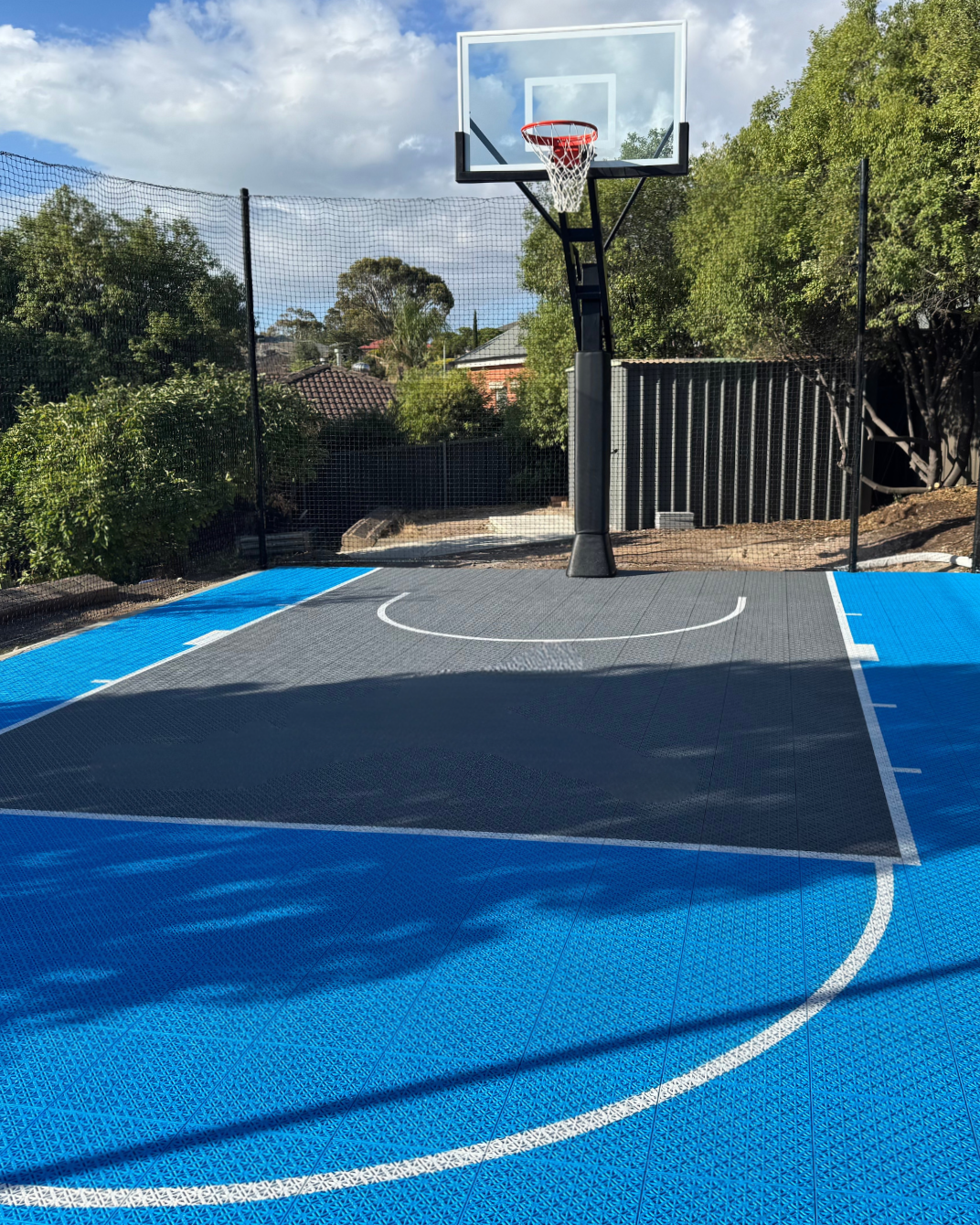
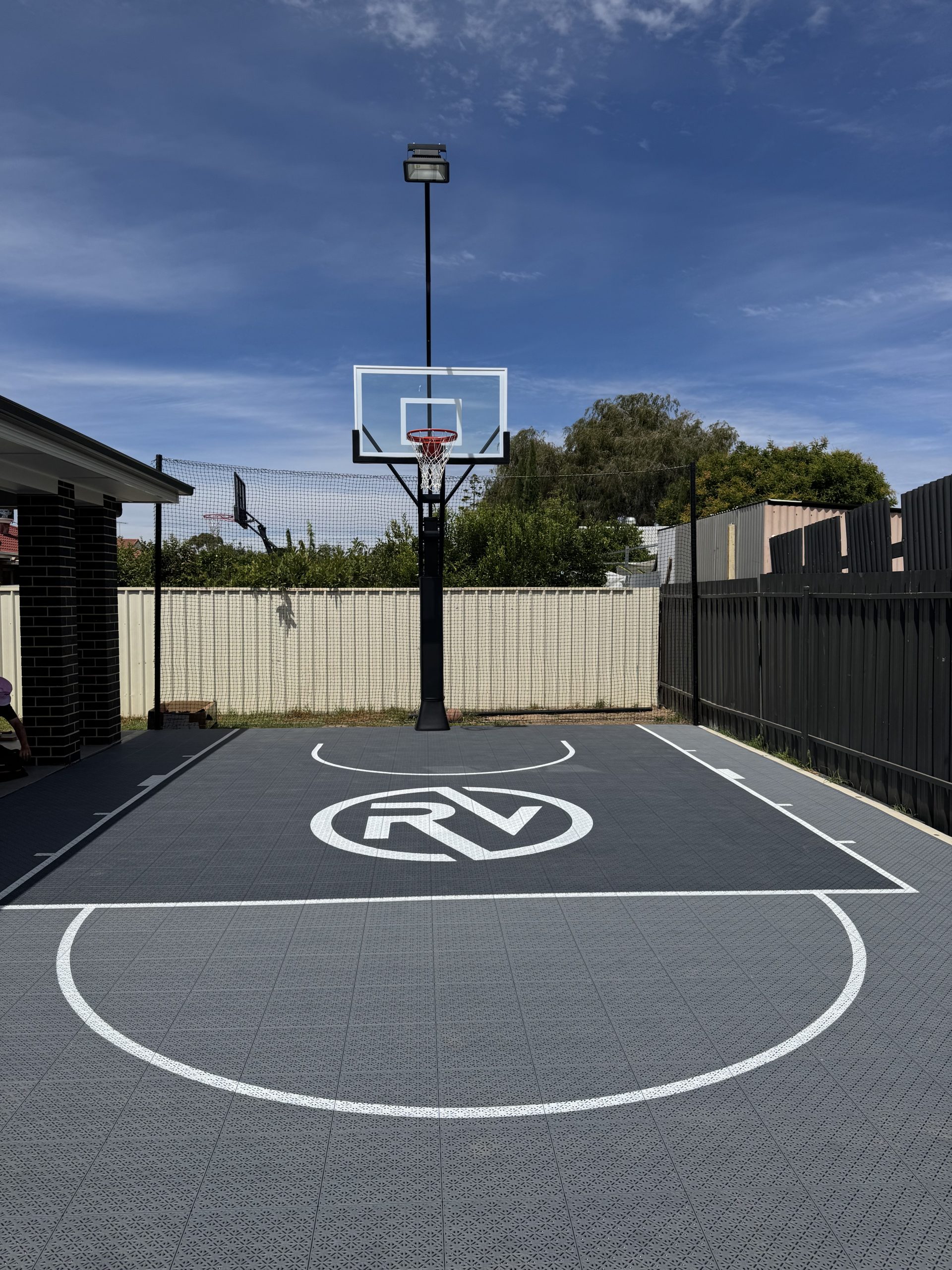
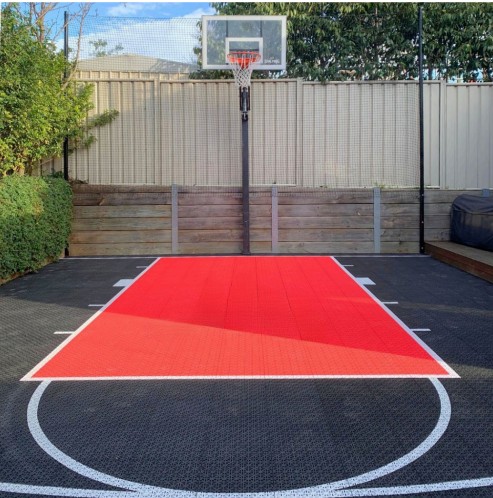
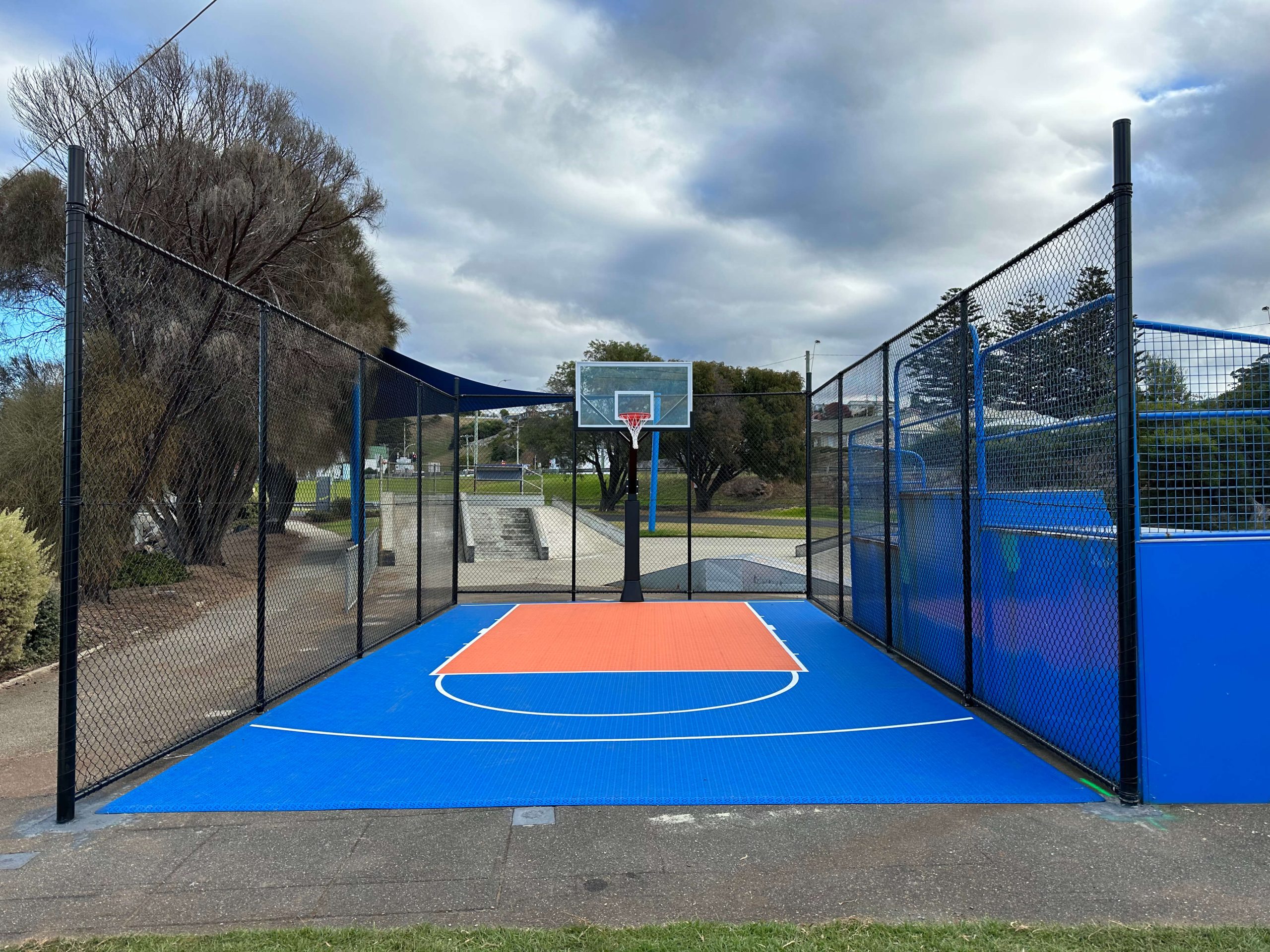
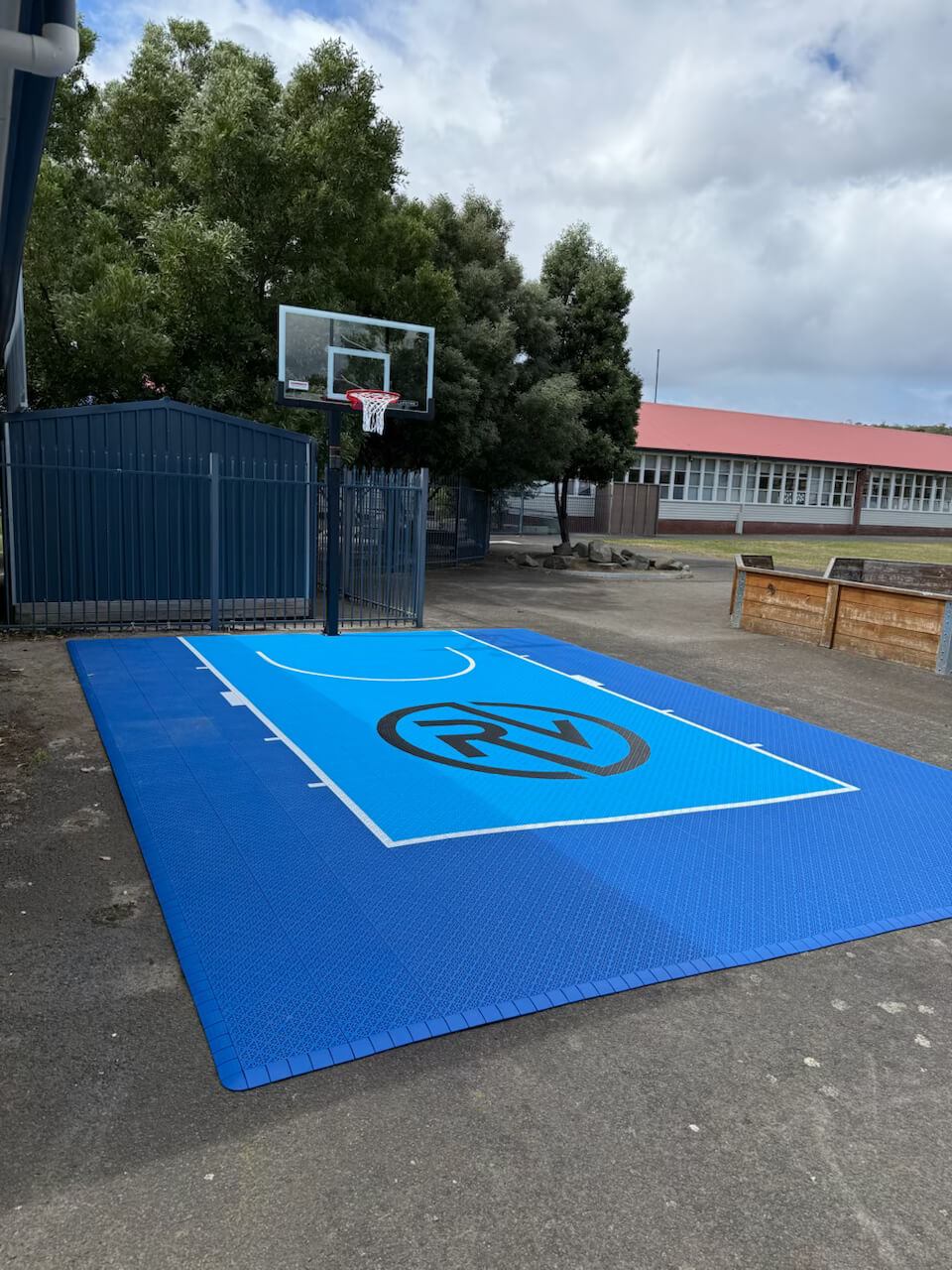
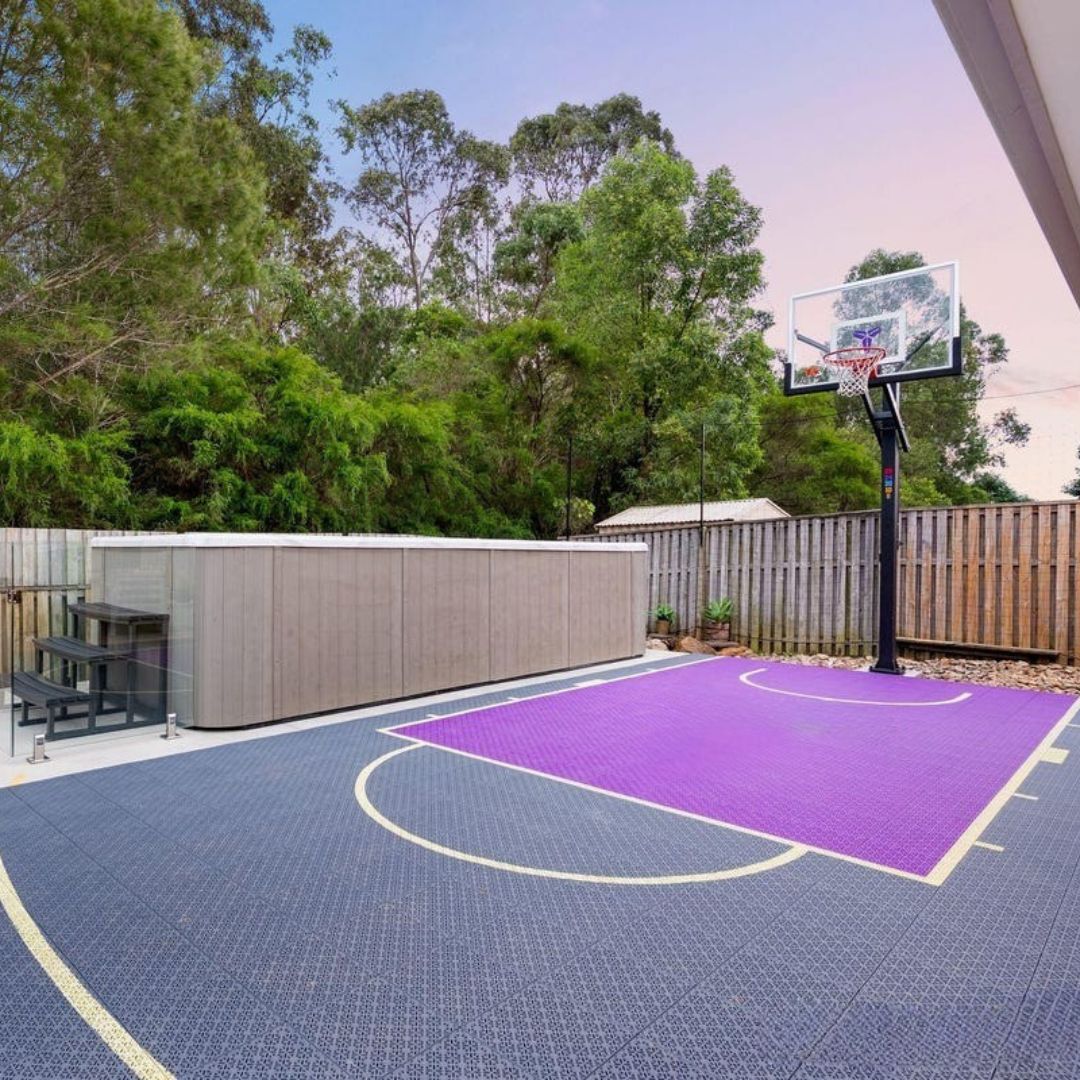
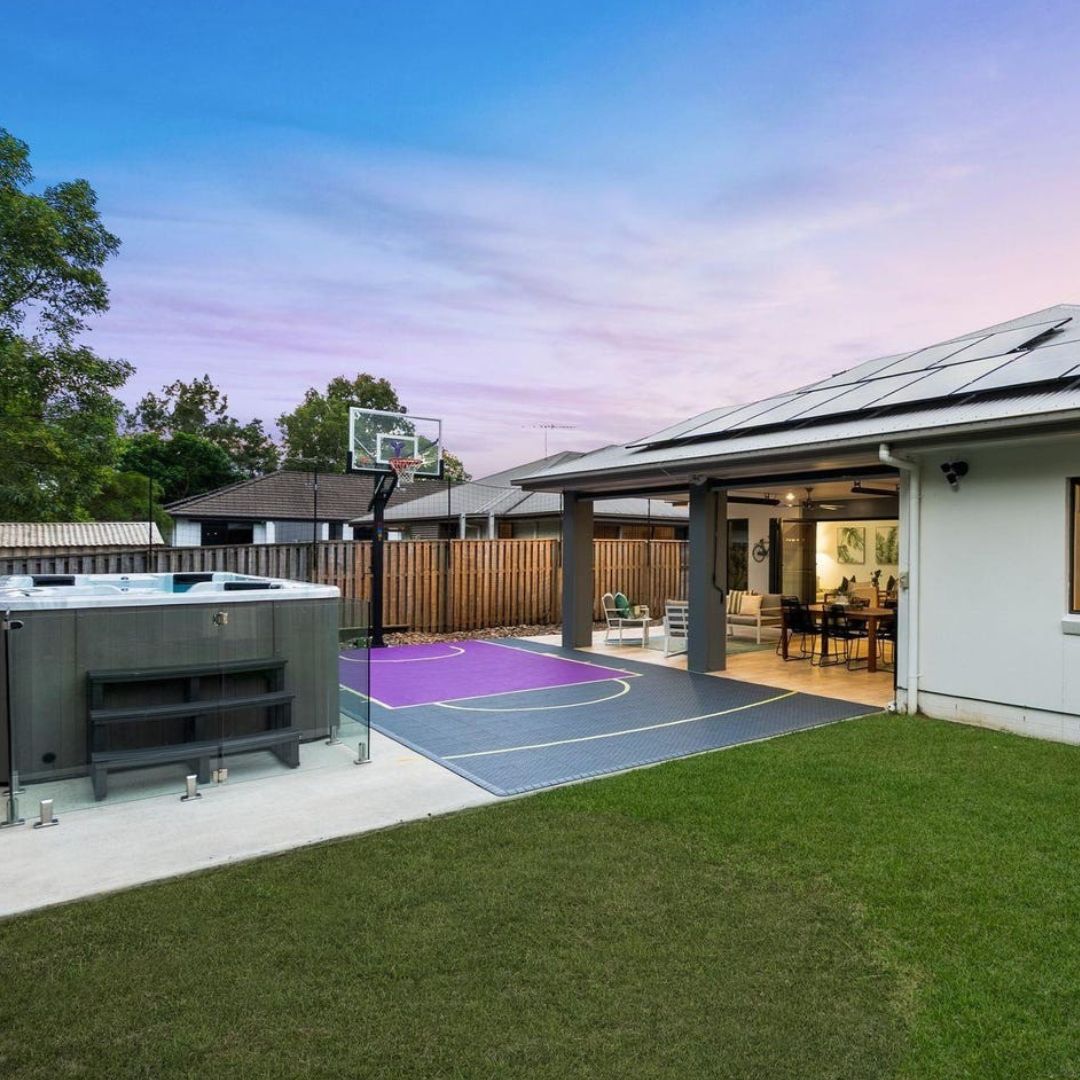
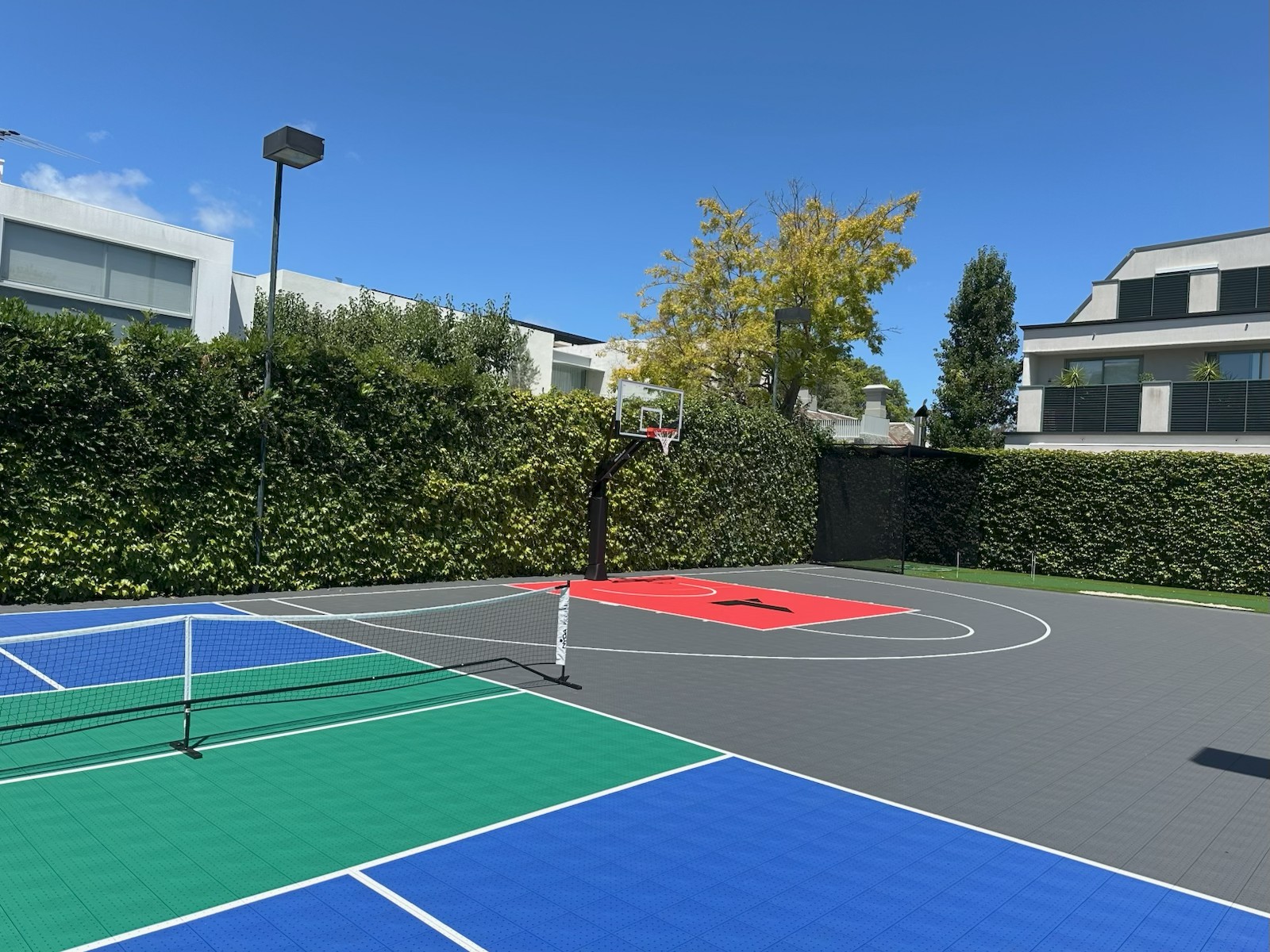
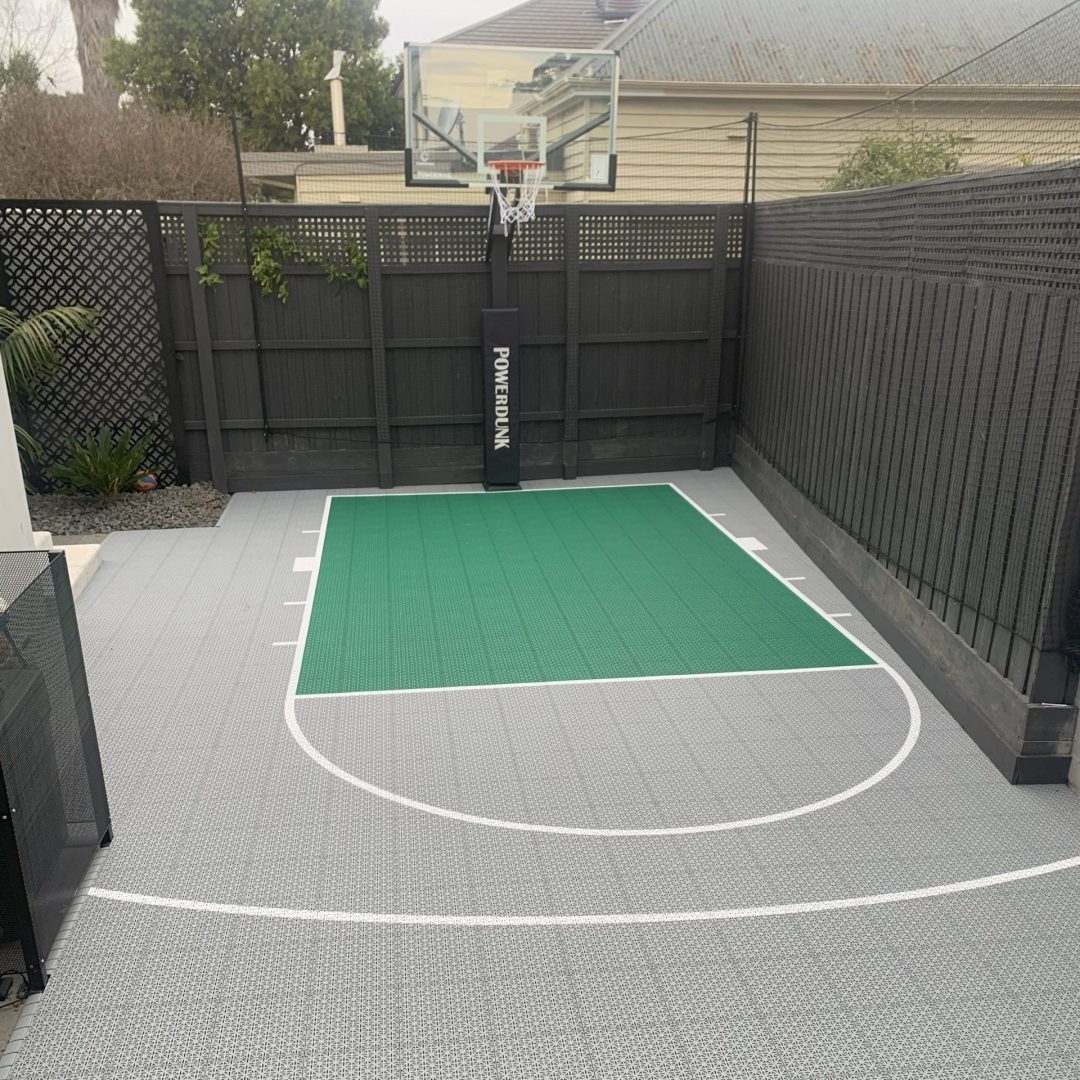
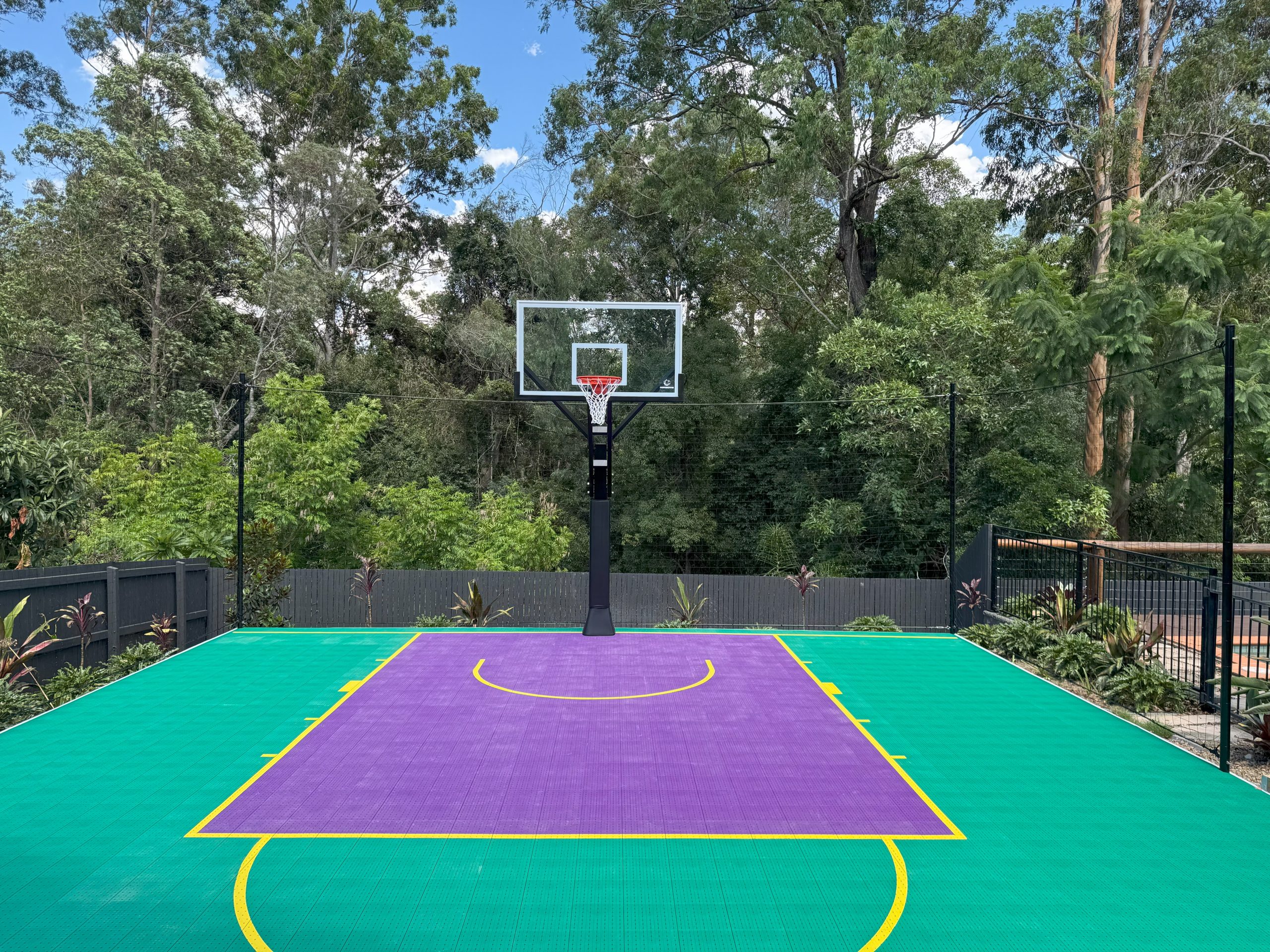
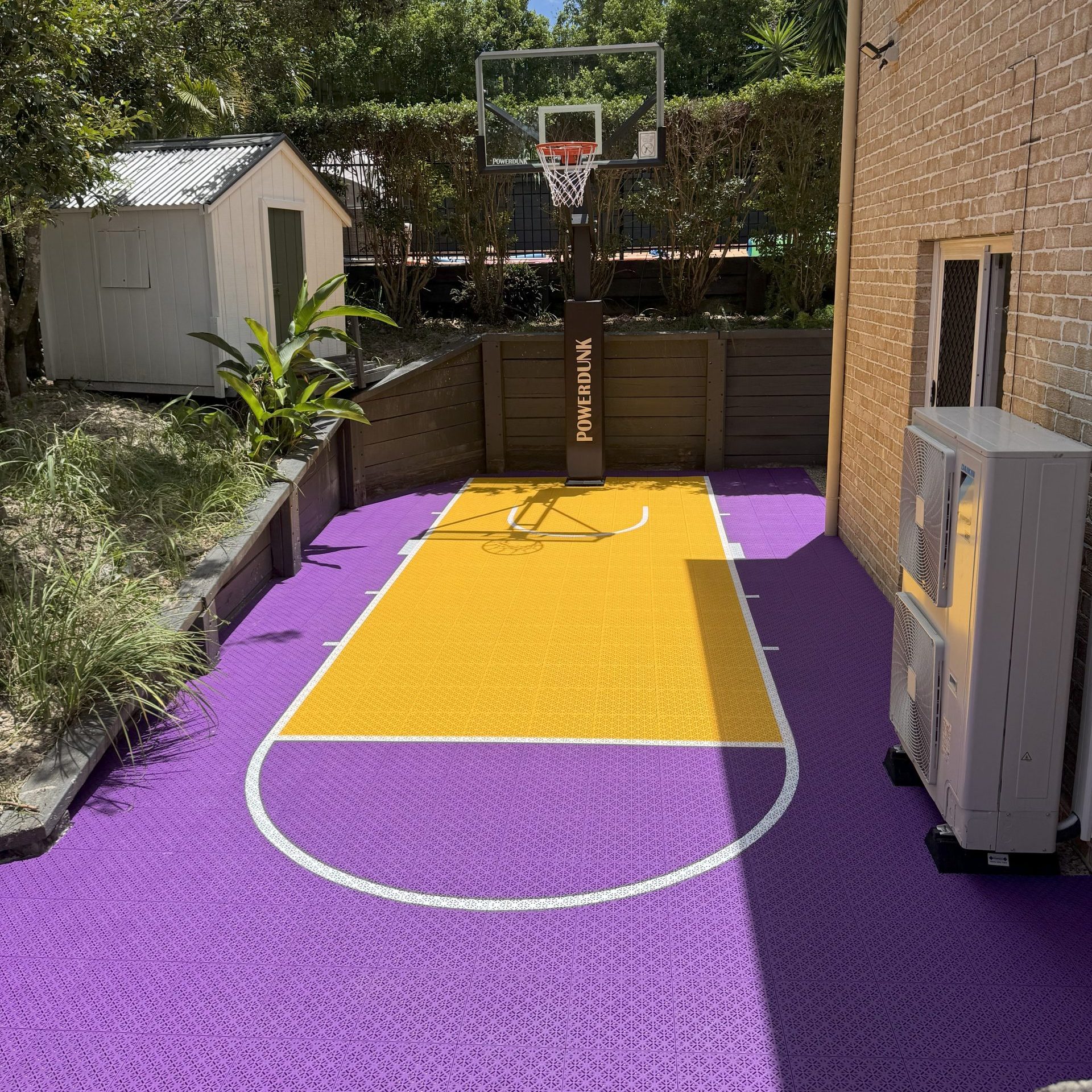
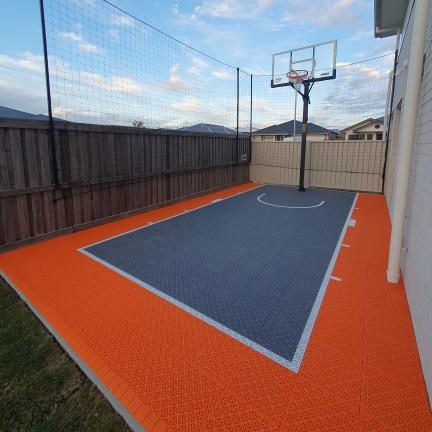
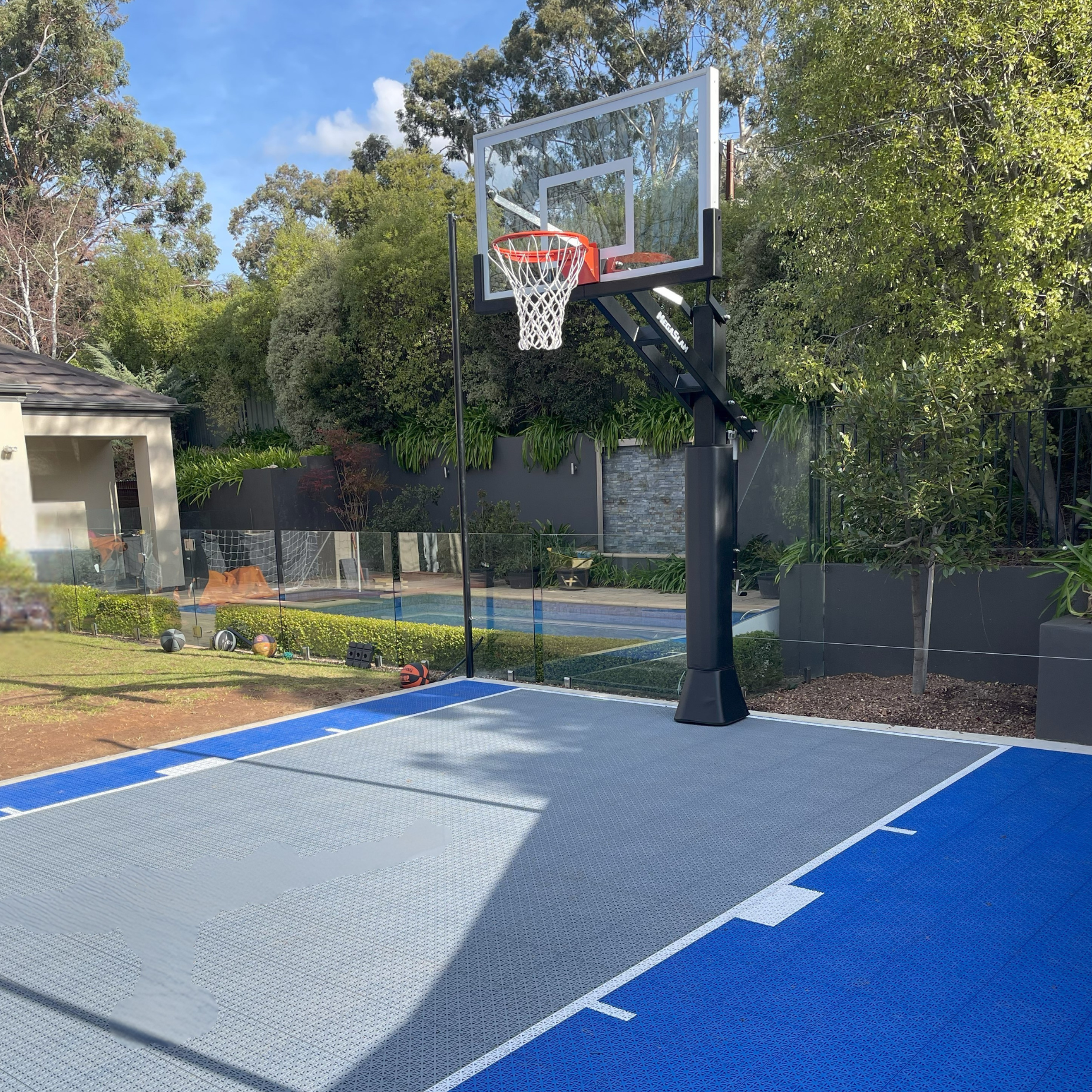
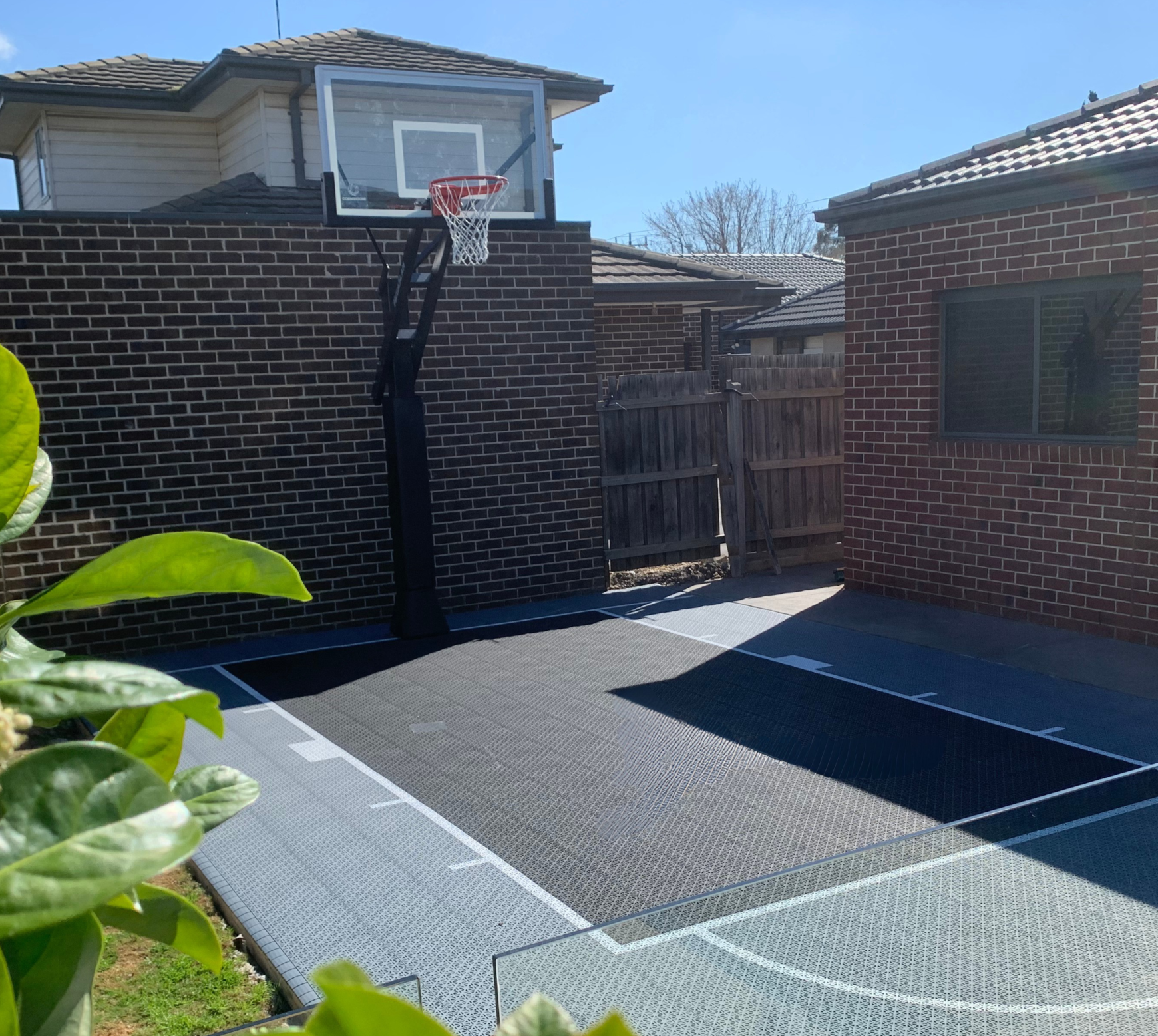
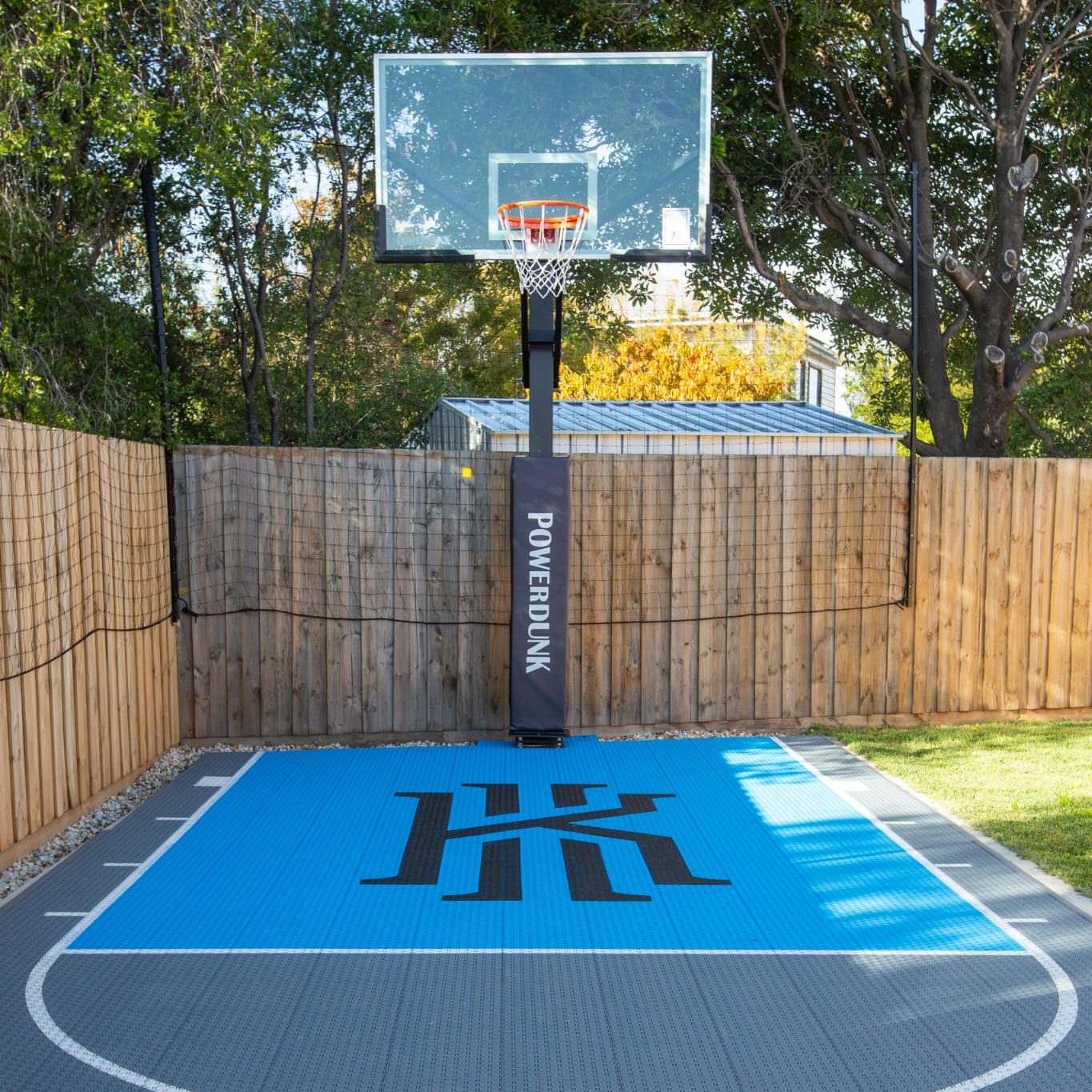
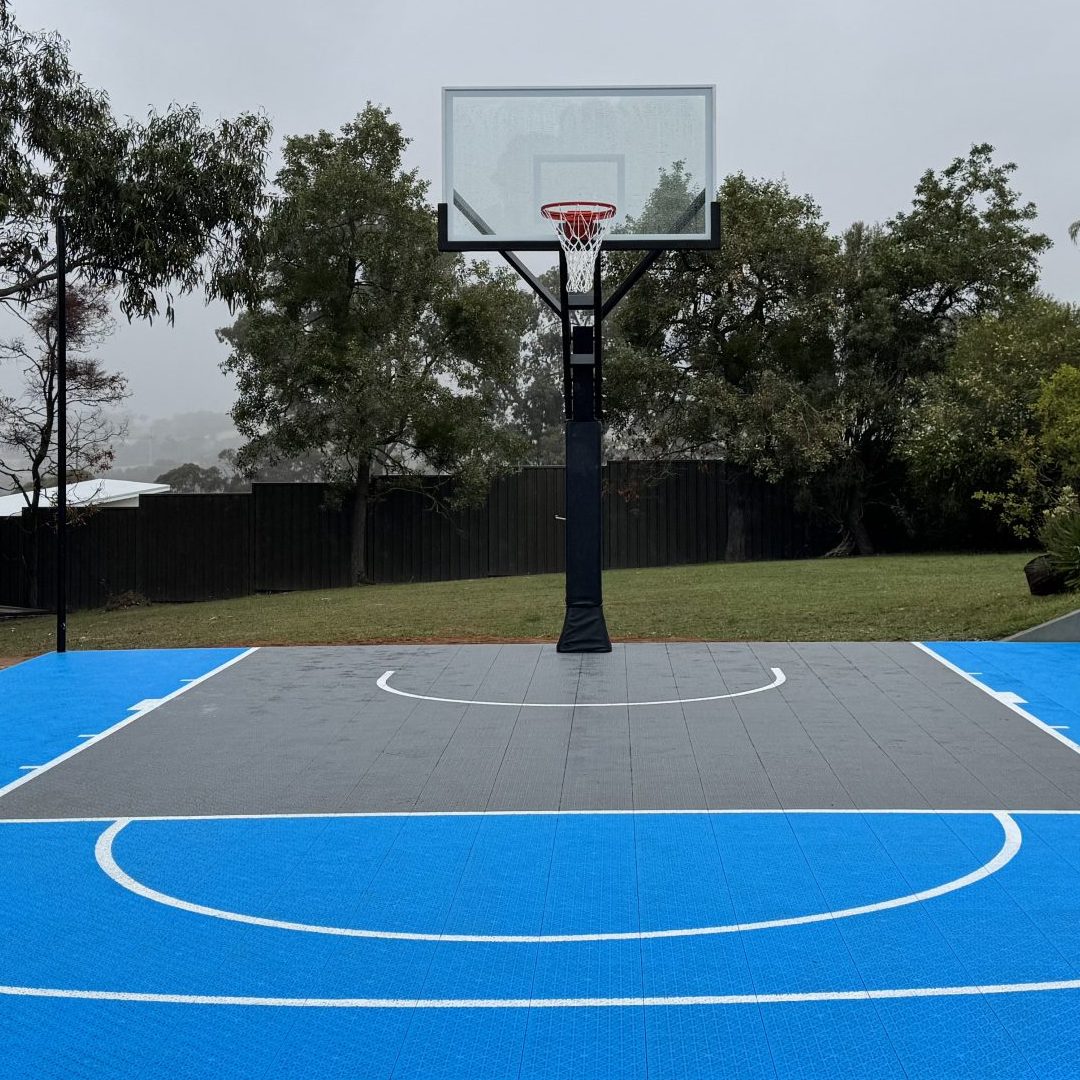
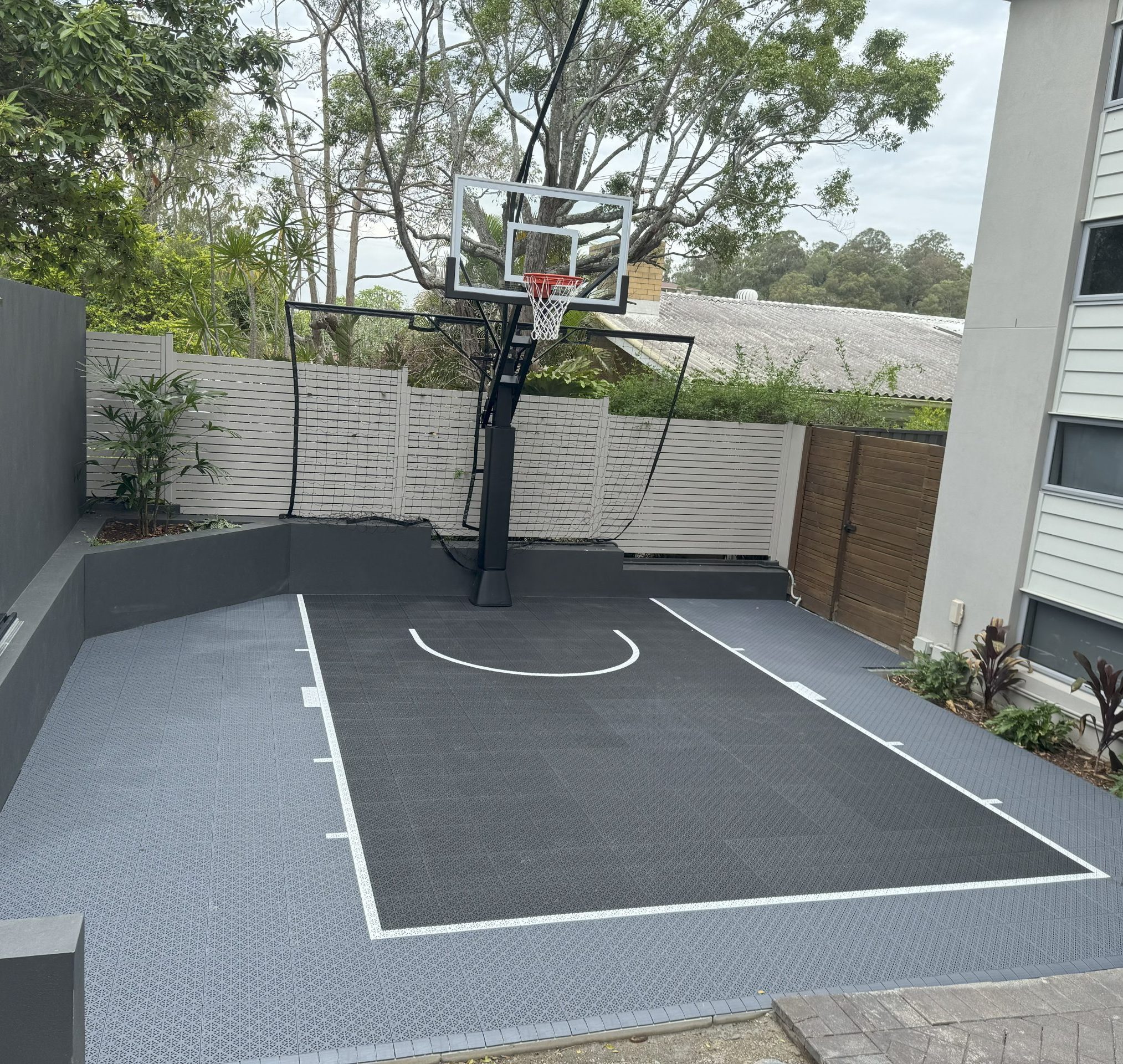
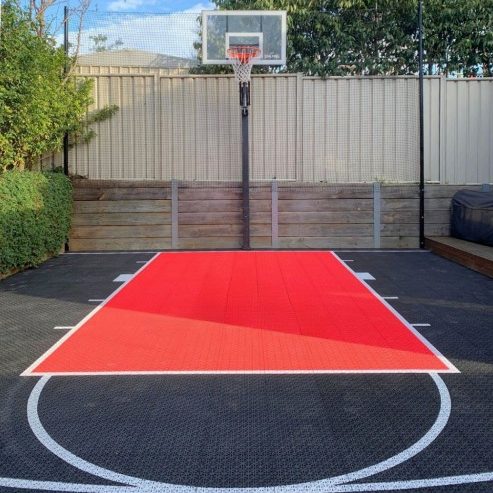
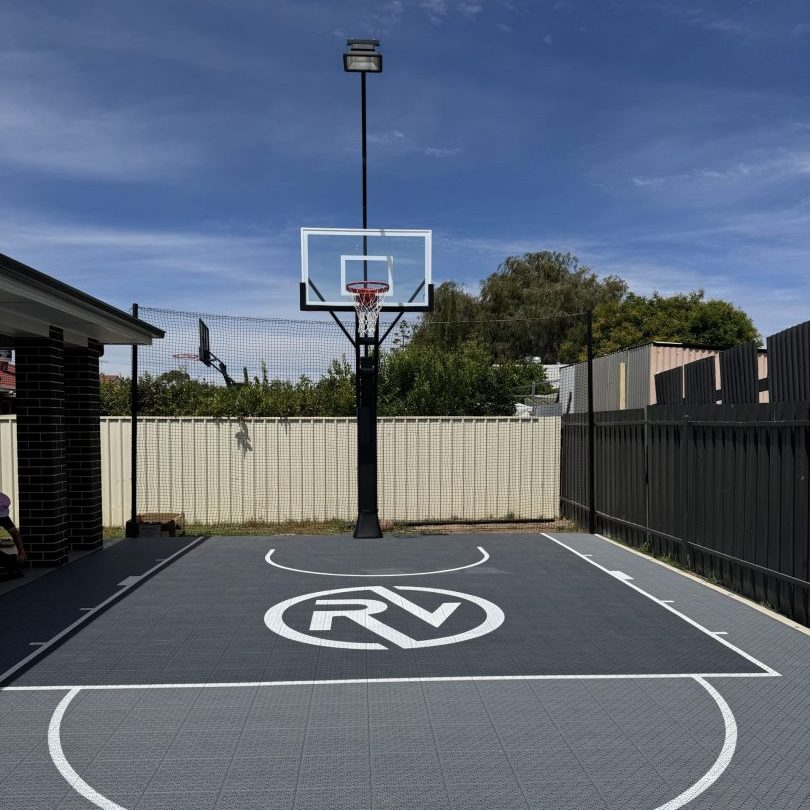
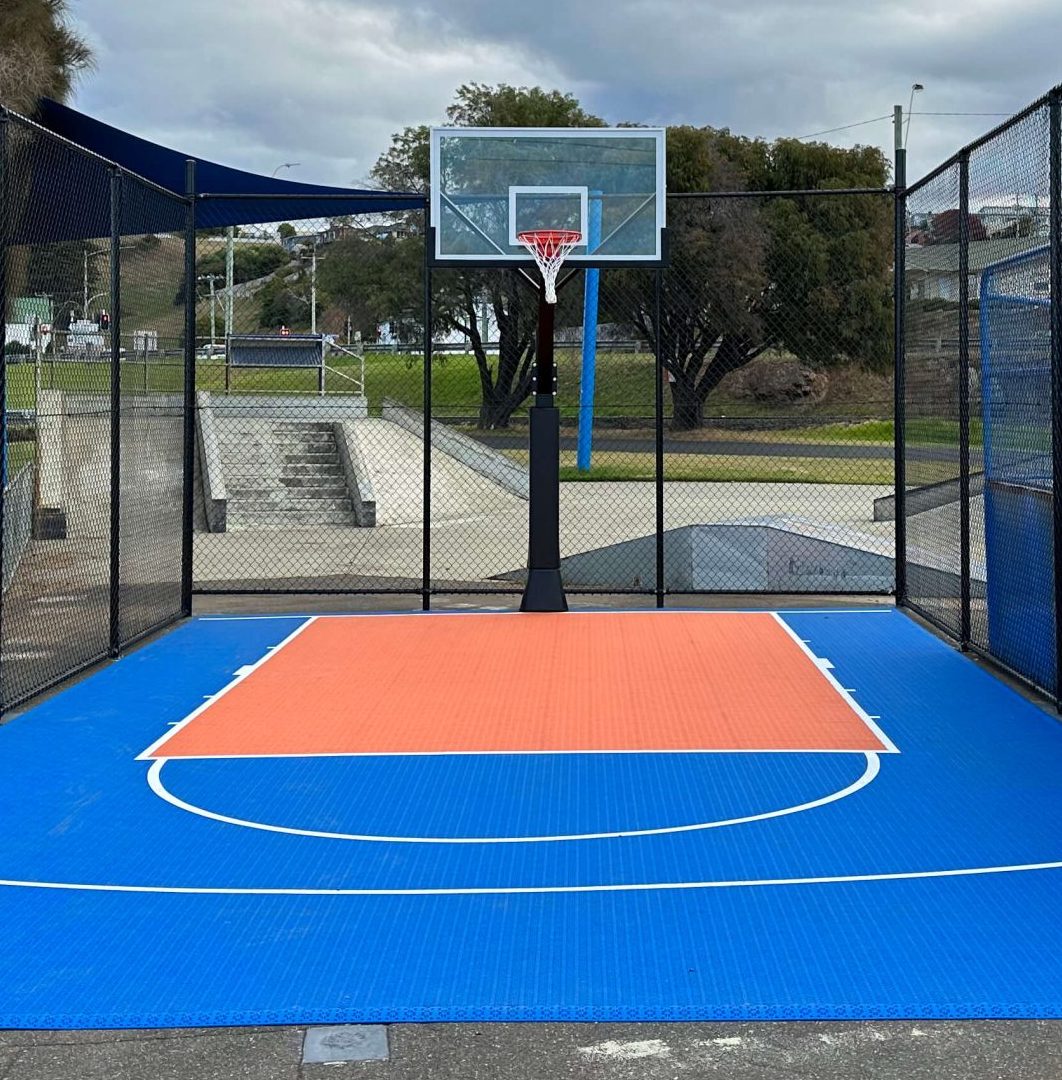
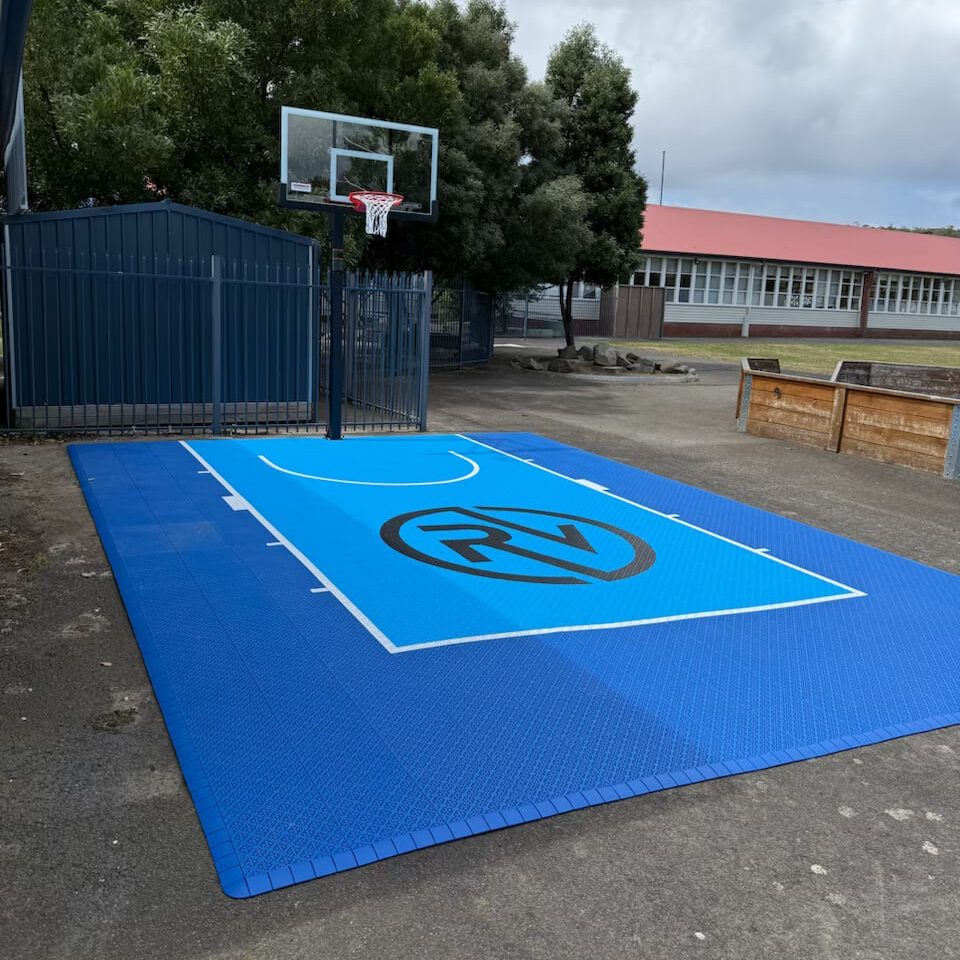
Modular sports court tiles are interlocking panels that clip together over the slab. They cost more than acrylic upfront and less than most people expect. They drain, they cushion, they’re replaceable one tile at a time, and they let you mark multiple sports in different colours without repainting anything.
For an outdoor court that will be used by kids, several times a week, for a decade, tiles win on total cost and on how the court feels to play on. That’s the honest comparison – and it’s why the whole court surface range is built around them.
Shock absorption is the number that matters most
If you only compare one spec across quotes, make it shock absorption.
Shock absorption is the percentage of impact force the surface takes instead of your body. Concrete absorbs close to nothing. A tile rated at under 35% is taking roughly a third of the load out of every landing, every stop, every change of direction.
The two numbers you’ll see across our range are under 10% and under 35%, and the gap between them is real:
- Under 10% – a firm, fast surface. Ball response is quick and the tile is light. Ideal for younger kids and casual play, where sessions are short and bodies are light.
- Under 35% – noticeably softer underfoot. This is what you want for longer sessions, heavier or older players, and anyone training seriously several times a week.
The way we put it to parents: if your under-10s are shooting around for twenty minutes after school, the firmer tile is plenty. If you’ve got a 16-year-old doing an hour of ball-handling drills four nights a week, spend the extra on cushioning. Their knees will be doing that for another thirty years.
The step up from our entry-level tile to the cushioned one is about $20 per square metre. On most residential courts that’s the highest-value upgrade on the whole quote.
Polypropylene or TPE? What the tile is made from matters
Modular court tiles come in two materials, and the material sets both the feel and the price.
Polypropylene (PP) is a rigid plastic. PP tiles are lighter, cost less, and get their cushioning from engineered flex in the tile structure – our ProFlex Elite uses 50 directional cushions built into the underside to do exactly that. PP is the right call for most residential courts.
Thermoplastic elastomer (TPE) is a rubber-like material. TPE tiles are heavier – 5.2 to 8.57kg per square metre against 2.56 to 4.19 for PP – and that mass is the point. They sit more solidly, give a truer bounce, and hold up better under constant use. They also carry longer warranties: 10 to 15 years, against 8 for our PP tiles.
Weight is a useful proxy here. A heavier tile is generally a denser tile, and a denser tile plays truer and lasts longer. It’s not a rule you’d bet the house on, but it’s a good sense check when you’re comparing two products with similar marketing copy.
Matching the surface to the people who’ll actually use it
Six tiles sounds like a lot of choice until you sort them by who’s playing. Here’s how the range actually splits.
Kids and casual family play
ProPlay Elite – polypropylene, under 10% shock absorption, 8-year warranty, 2.56kg/m². The entry-level all-rounder. It’s the tile we recommend for under-16s, light-to-moderate use, and families who want a proper court without paying for cushioning nobody in the house needs yet.
Serious training and mixed-age households
ProFlex Elite – polypropylene, under 35% shock absorption, 8-year warranty, 4.19kg/m². Our number one seller, and the default recommendation for most residential courts. It handles a ten-year-old and their dad on the same afternoon.
Competition-grade basketball
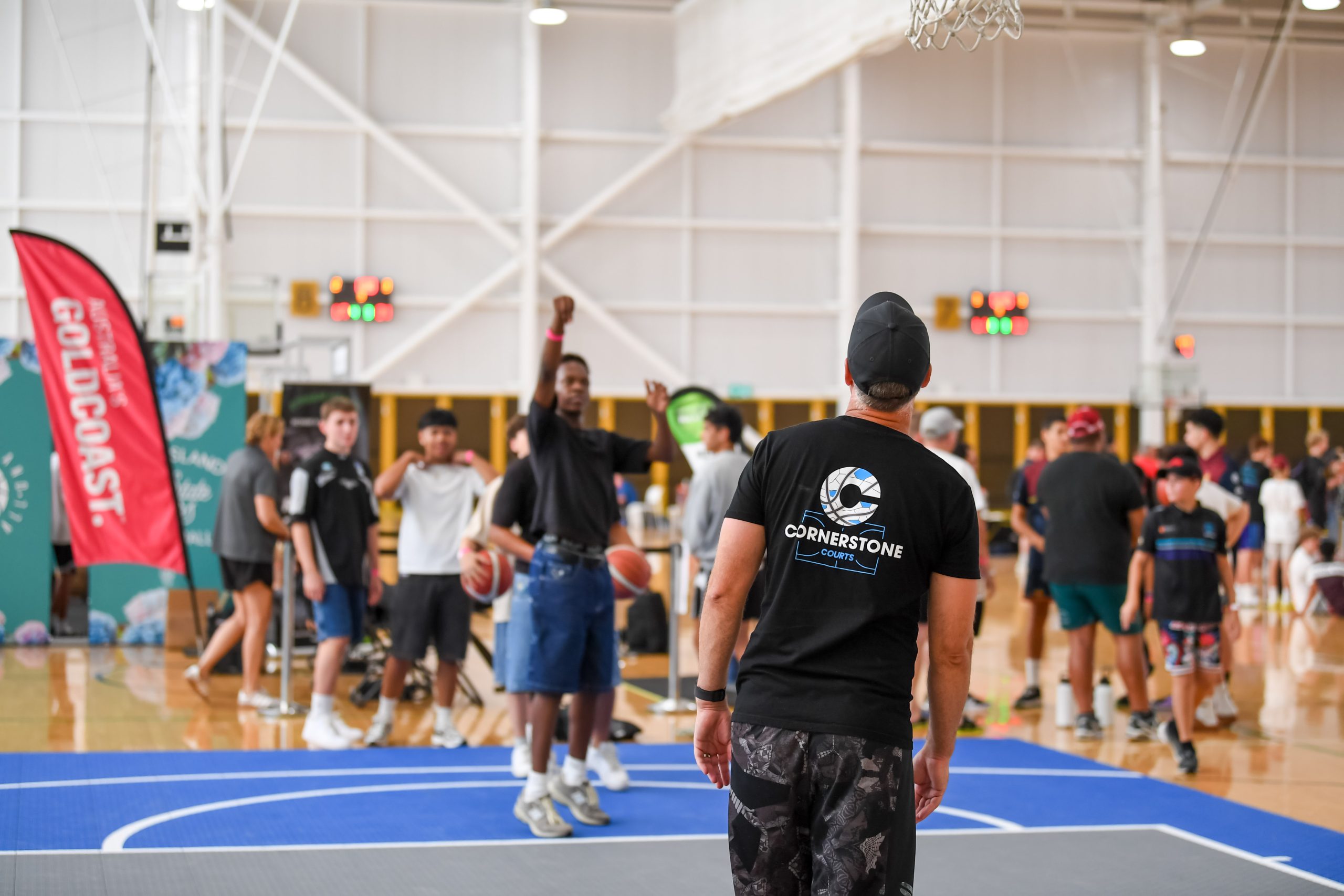
ProFlex Competition – TPE, under 35% shock absorption, 15-year warranty, 8.57kg/m². The best tile we sell, and FIBA-approved for World 3×3 basketball. Outstanding ball response and the longest warranty in the range.
Tennis, pickleball and racquet sports
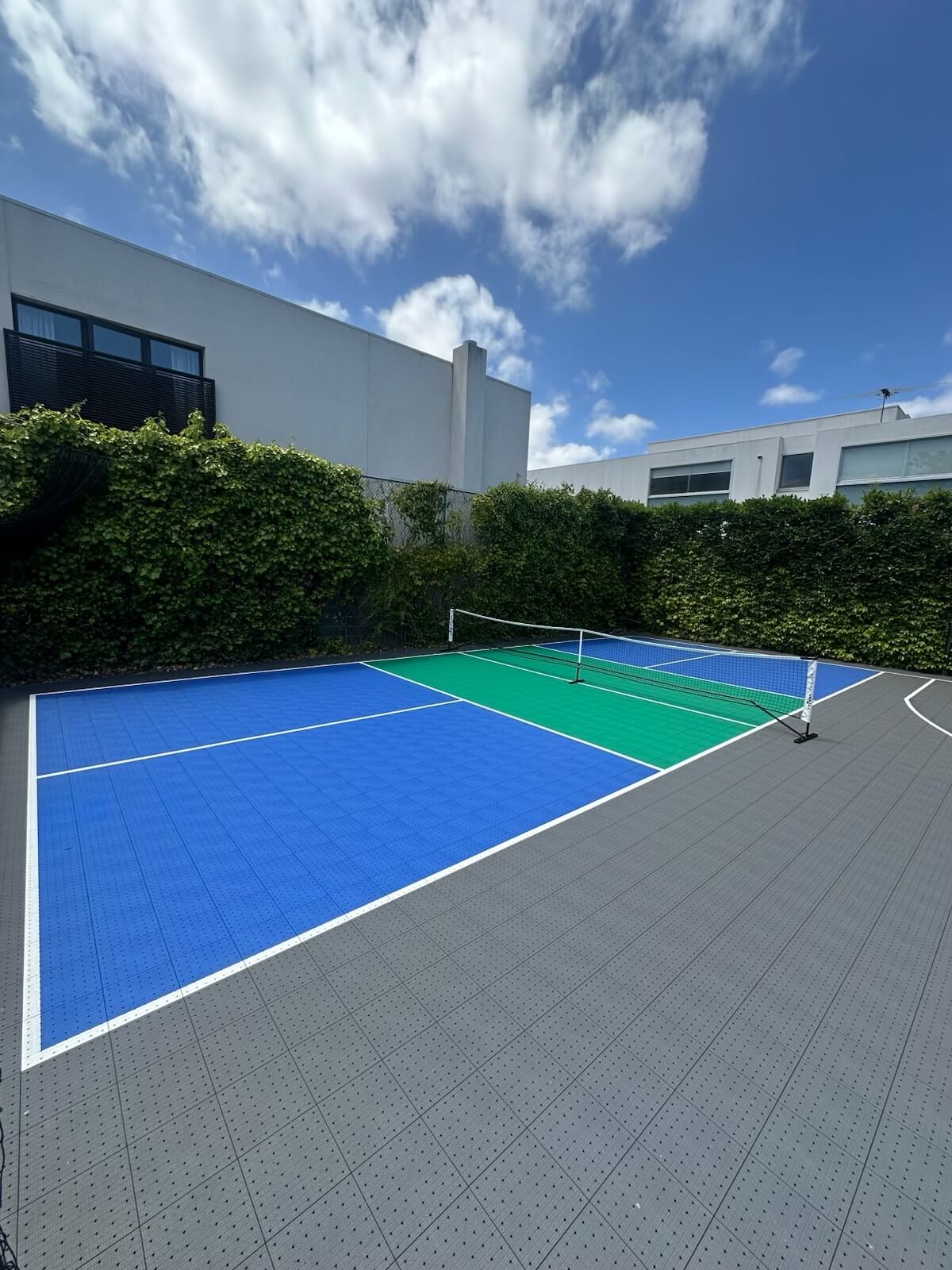
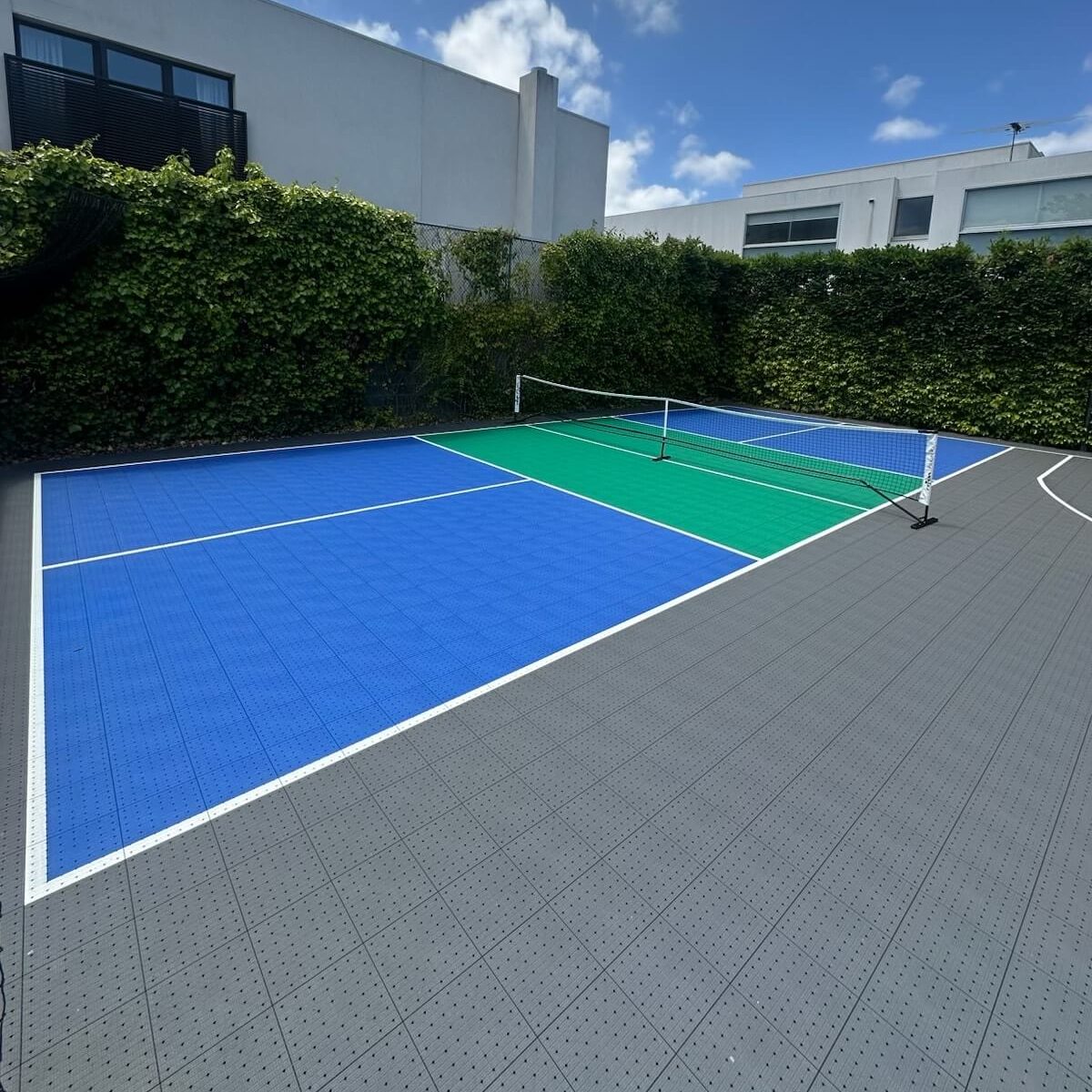
ProPlay Competition – TPE, under 35% shock absorption, 10-year warranty, 5.2kg/m². The best-value rubber tile on the market and our pick for racquet sports, where you want a strong, consistent bounce. If you’re building a pickleball court, start here – or go with the dedicated Pickleball Competition tile, which is purpose-built for dedicated pickleball surfaces.
Schools, councils and public courts
ProFlex Community – polypropylene, under 35% shock absorption, 10-year warranty, with anti-theft locking built into the tile. If a court is unsupervised, this is the specification. It’s the difference between a surface that’s still intact in year five and one that’s missing panels by the end of term two. Most commercial and community courts we build use it.
Every tile in the range comes in the same twelve colours, so choosing for performance doesn’t cost you the look you want.
Do you need a FIBA-approved court surface?
For a backyard court, no. For a competition court, it’s the only spec that settles the argument.
FIBA approval means the surface has been tested against the standards for World 3×3 basketball – ball rebound, surface friction, shock absorption, the lot. It’s a third-party tick, not a marketing claim, which is exactly why it matters when you’re specifying a court for a club, a school or a facility that will host sanctioned games. `[external link: FIBA equipment and facility standards page]`
For a driveway half court, a FIBA-approved tile is a lovely thing that your kids will not notice. Put the money into the slab, a decent hoop and a bit more square metreage instead.
Frequently asked questions
How long does an outdoor sports court surface last?
Modular tiles carry warranties from 8 to 15 years depending on the tile, and a well-built court on a properly prepared slab typically outlives that. The big variable isn’t the tile – it’s what’s underneath it. A slab that moves will shorten the life of any surface laid on it.
Can you lay court tiles over an existing concrete slab?
Usually, yes. The slab needs to be structurally sound, reasonably level and draining away from the house. That’s the first thing we assess on a site visit, because a tile surface will follow the contours of whatever it’s clipped onto.
What’s the best surface for a multi-sport court?
A cushioned tile with under 35% shock absorption, marked with multiple colours for different sports. Basketball, netball and pickleball all play well on the same modular surface – line marking, not the tile, is what separates them.
Do modular tiles get too hot in summer?
Tiles run cooler than bare concrete or dark acrylic, because air moves through the open grid structure instead of the surface holding heat like a slab. Lighter tile colours help further. It’s worth a thought if your court gets full western sun.
Can I install court tiles myself?
Yes. The clip-lock system is designed for it, and DIY court kits ship Australia-wide. If you already have a sound slab, self-installing the surface is the single biggest saving available on a court build.
The takeaway
Choosing the best surface for an outdoor basketball court is less about finding the best product and more about being honest about who’s playing on it, how often, and for how many years. A ten-year-old shooting after school and a rep player doing four sessions a week need different things – and paying for the wrong one, in either direction, is the most common mistake we see.
We’ve built more than 380 courts around the country since 2024, and both of us coach junior basketball, so we’ve watched a lot of kids play on a lot of surfaces. If you want a straight answer for your space, get a free online quote – transparent pricing, no hidden costs, and every installed floor is backed by our price beat guarantee. Or call 1800 COURT5 and talk it through with the team in your state.